
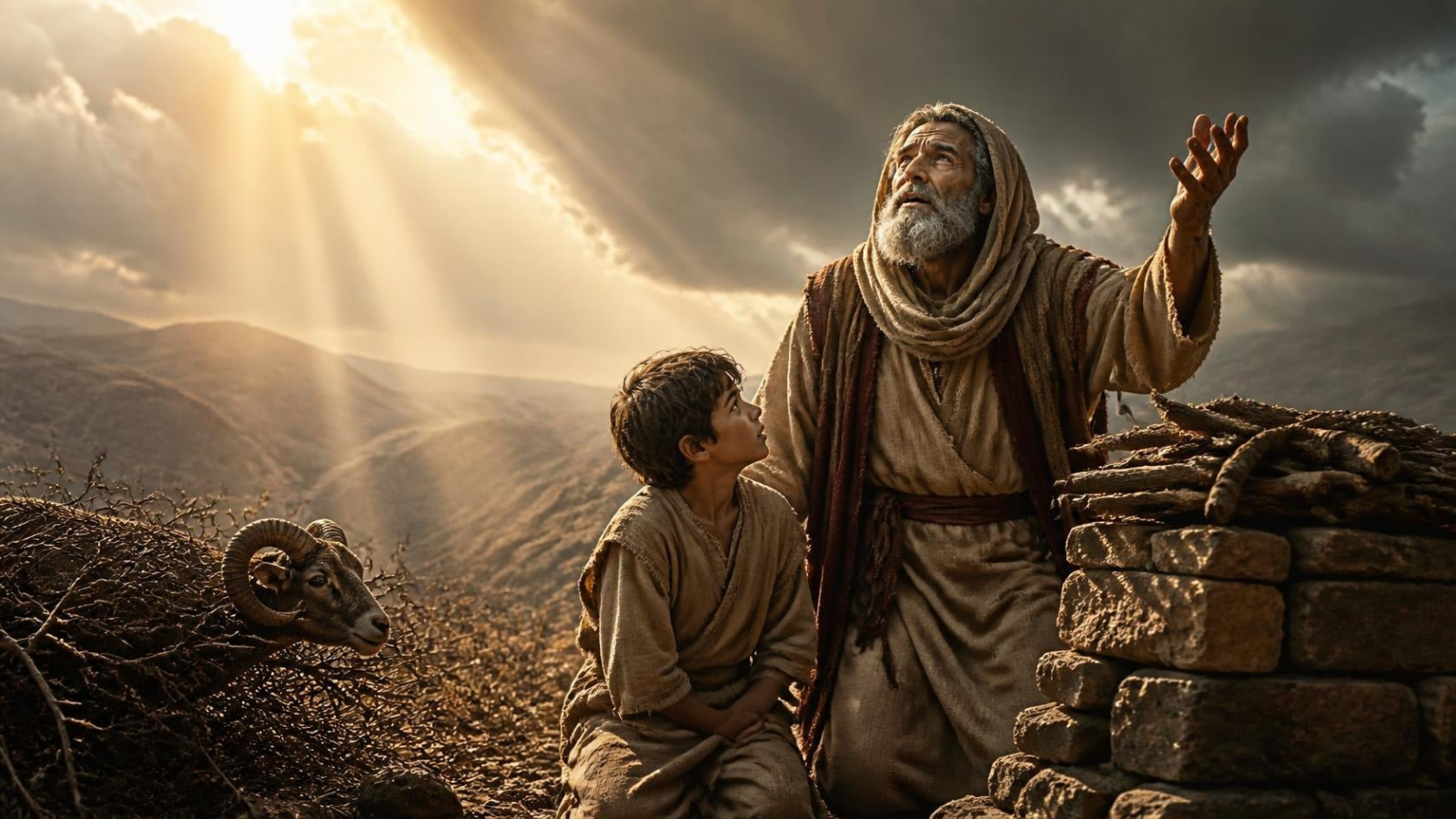
Abraham Is Commanded to Offer His Son, God Provides the Ram, and the Covenant Promise Is Reaffirmed
Primary Scripture: Genesis 22:1-19
Reading Abraham’s Test and God’s Provision Faithfully
Genesis 22:1–19 is one of Scripture’s most profound and demanding narratives. God commands Abraham to take Isaac—the son whom Abraham loves and through whom God has already declared that the covenant line will continue—and offer him as a burnt offering. The opening verse gives readers information Abraham does not initially possess: God is testing Abraham. The narrative must therefore be read to its conclusion.
God stops Abraham before Isaac is harmed and provides a ram for the offering. In reading this passage, it is particularly important to remain careful about the distinction between the Genesis account itself, reasonable canonical connections, and later theological interpretation. Genesis explicitly presents Abraham’s test, his obedience, the sparing of Isaac, God's provision of the ram, and the reaffirmation of the covenant promises. Later Scripture also reflects upon Abraham’s faith, including Hebrews 11 and James 2. Christian readers have long recognized correspondences between this passage and the sacrificial work of Jesus Christ. Those connections are important, but they should be made through the witness of the whole canon rather than by claiming that every narrative detail in Genesis 22 is explicitly identified by Genesis itself as a prediction of Christ.
What This Passage Shows
The LORD tests Abraham’s faith without allowing Isaac to be sacrificed. Abraham trusts and obeys, God Himself provides the substitute, and the promises concerning Abraham’s offspring and blessing to the nations are reaffirmed.
Abraham Journeys to Moriah in Obedience to God’s Test
Genesis 22 begins by telling the reader exactly what is happening: “God did tempt Abraham…” In this context, the meaning is that God tests Abraham. This opening statement is essential. The narrative is not presenting God as discovering information because He lacks knowledge. Rather, Abraham is brought into a situation in which his faith and obedience are demonstrated through action. The reader knows from the beginning that this is a test.
God calls his name: “Abraham.” Abraham answers: “Behold, here I am.” His response communicates readiness to hear. This simple exchange begins an episode that will test Abraham more severely than anything Genesis has recorded previously.
God has already declared: “in Isaac shall thy seed be called.” —Genesis 21:12 This makes the command of Genesis 22 especially difficult. The same God who promised that Abraham’s covenant line would continue through Isaac now commands Abraham to offer Isaac. From Abraham’s perspective, obedience and promise appear to stand in impossible tension. Yet God's previous word concerning Isaac has not been revoked.
Abraham is instructed to travel to the land of Moriah and offer Isaac upon one of the mountains God will show him. Genesis does not yet identify the precise mountain. Later Scripture associates Moriah with the location where Solomon's temple was built: 2 Chronicles 3:1 identifies Mount Moriah as the site of the temple in Jerusalem. That later canonical connection is significant, while Genesis 22 itself keeps the immediate focus upon Abraham’s journey of obedience.
Genesis repeatedly records Abraham rising early at decisive moments. Here: “Abraham rose up early in the morning…” There is no recorded argument. No recorded delay. He prepares the donkey, takes two young men and Isaac, splits wood for the burnt offering, and departs for the place God has named. The narrative communicates obedience through action. On the third day, Abraham sees the place from afar. The journey has therefore not been instantaneous. For three days Abraham travels with Isaac toward the mountain. Genesis does not tell us everything Abraham thought during those days.
Abraham tells the young men: “Abide ye here with the ass; and I and the lad will go yonder and worship…” Then he adds: “and come again to you.” This statement deserves careful attention. Abraham speaks in the plural: we will return. Genesis itself does not immediately explain what Abraham expects to happen. Later Scripture provides important insight into his faith. Isaac says: “My father.” Abraham answers: “Here am I, my son.” Isaac observes that they have fire and wood. But something is missing.
Abraham Trusts God to Provide as He Prepares to Offer Isaac
Abraham answers: “My son, God will provide himself a lamb for a burnt offering.” —Genesis 22:8 Abraham directs Isaac’s question toward God. He does not explain how provision will occur. He simply expresses confidence that God will provide. Then Genesis repeats: “so they went both of them together.” Abraham stretches out his hand and takes the knife to slay his son. The test reaches its decisive moment. Abraham has not merely expressed willingness verbally. His obedience has reached the point at which, unless God intervenes, Isaac will die. And God intervenes.
The angel declares: “for now I know that thou fearest God, seeing thou hast not withheld thy son, thine only son from me.” Abraham’s fear of God has been demonstrated through obedient action. James 2:21–23 later appeals to this event when explaining the relationship between Abraham’s faith and works. His faith was not merely an abstract profession. It acted.
God Provides the Ram and Reaffirms His Covenant Promise
Abraham looks up and sees a ram caught by its horns in a thicket. He takes the ram and offers it: “in the stead of his son.” This wording is crucial. Isaac is spared. The ram is sacrificed instead of Isaac. The provision Abraham spoke of on the ascent has now become visible. Abraham names the place: “Jehovahjireh” commonly expressed as The LORD Will Provide. Genesis connects the name directly with what happened upon the mountain. God supplied what was required for the offering while preserving Isaac. Abraham had told his son that God would provide. Now he commemorates that provision.
The angel of the LORD calls to Abraham again. Because Abraham has obeyed and has not withheld his son, God solemnly reaffirms promises already woven through Abraham’s story: his offspring will be greatly multiplied; they will be compared with the stars of heaven and sand upon the seashore; and his offspring will possess the gate of their enemies. The test concludes not with the destruction of the promise, but with its reaffirmation.
Scripture Connections
A few important passages help place this passage within the wider witness of Scripture:
- Hebrews 11:17–19
- 2 Chronicles 3:1
- James 2:21–23
Conclusion — What This Passage Shows
God tests Abraham concerning Isaac, the promised son. Abraham obeys, but God stops the sacrifice, provides a ram, and reaffirms His covenant promises.
Join the Conversation
After reading Genesis 22:1-19, what truth from this passage stands out most clearly to you, and how does it shape your understanding of God and His purposes?
Take a moment to reflect on the passage and share your thoughts in the comments below. Your reflection may encourage another reader in their own journey through God’s Word.
Go Deeper
This article is drawn from a fuller Platinum Study with deeper exposition, Scripture connections, key truths, and interpretive safeguards.