God Quietly Prepares the Next Generation of the Covenant Story
Primary Scripture: Genesis 22:20-24
A Quiet Transition with Future Significance
Genesis 22 reaches its great dramatic height on Mount Moriah, where Abraham is tested, Isaac is spared, God provides the ram, and the covenant promises are reaffirmed. Yet the chapter does not end there. Instead, Scripture turns briefly from Abraham and Isaac to the household of Abraham's brother Nahor. At first, Genesis 22:20–24 may appear to be little more than a genealogical notice—a list of relatives inserted between two much larger narratives.
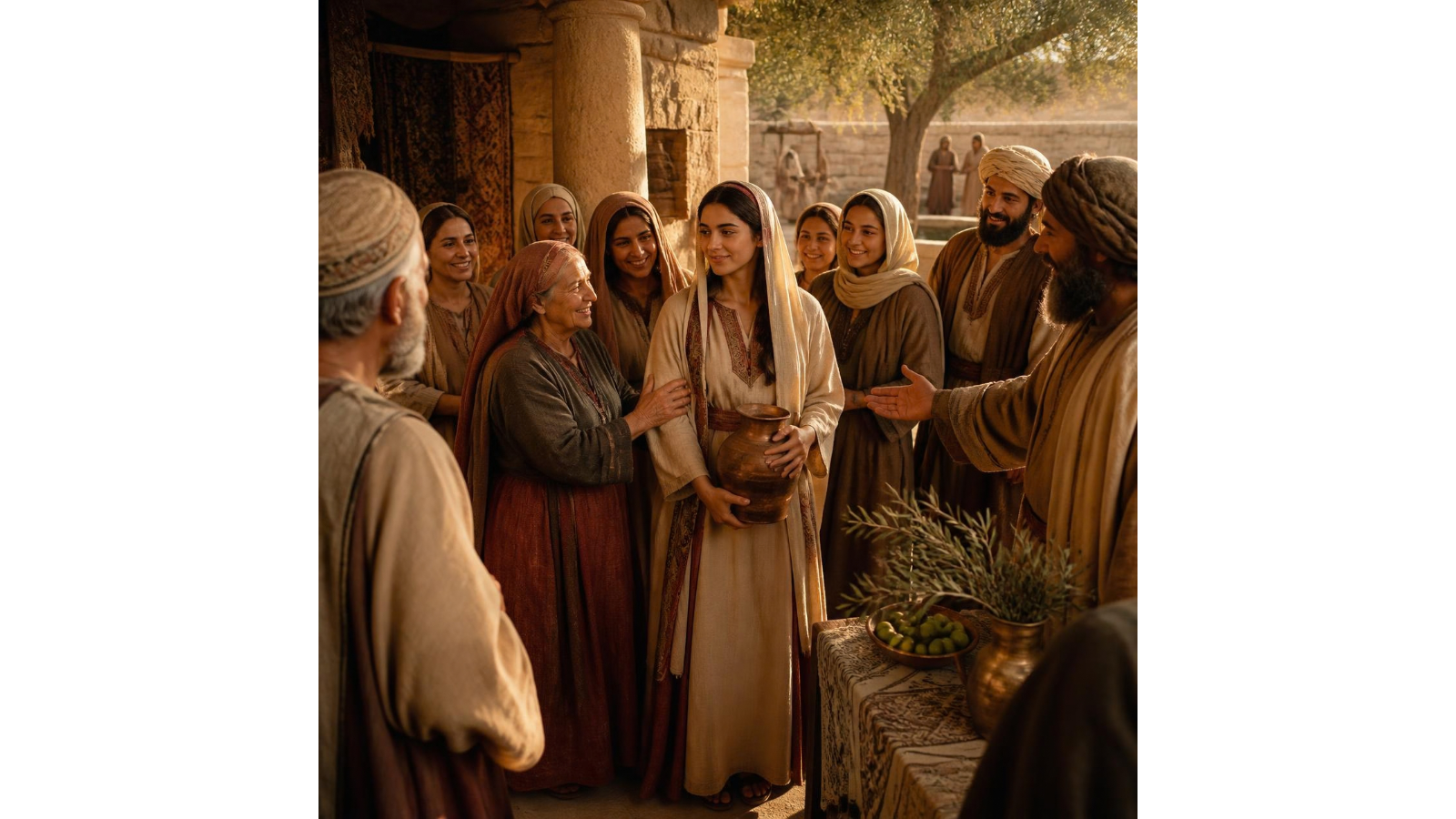
But within that list appears a name that will soon become very important: Rebekah. Genesis does not yet explain what role she will play. It simply introduces her. Only later, when Abraham seeks a wife for Isaac, will the significance of this brief notice become clear. The genealogy therefore functions as a quiet bridge between what God has already accomplished through Abraham and what He will continue to accomplish through the next generation. The passage encourages us to read even Scripture's quieter genealogical transitions carefully. The biblical story does not advance only through dramatic miracles and great acts of faith. It also advances through generations, families, births, relationships, and circumstances that God can use within His unfolding purposes.
What This Passage Shows
God's purposes extend beyond the events immediately visible to His people. While Abraham walks in obedience, God has already been providentially preparing people and circumstances that will become important in the continuation of the promised line.
After Moriah, News Comes to Abraham
Genesis 22:20 “And it came to pass after these things, that it was told Abraham, saying, Behold, Milcah, she hath also born children unto thy brother Nahor.”
The words “after these things” connect this passage with what has just occurred. Abraham has undergone the testing concerning Isaac. God has provided the substitute sacrifice. Isaac has been preserved. The promises concerning Abraham's offspring have again been affirmed. Now the narrative changes direction. Abraham receives news concerning his extended family. The text does not tell us who brought the report or exactly when Abraham received it. Scripture's concern is not with those details. What matters is the information itself. Milcah has borne children to Nahor, Abraham's brother. Nahor had already been identified within Terah's family: Genesis 11:27 “Now these are the generations of Terah: Terah begat Abram, Nahor, and Haran…”
Genesis is therefore reconnecting the reader with a family line introduced much earlier in the book. This is not the covenant line itself. The promises given to Abraham will proceed through Isaac. Nevertheless, Nahor's family will soon intersect directly with that covenant family. Genesis records the children born to Nahor and Milcah: Genesis 22:21–22 “Huz his firstborn, and Buz his brother, and Kemuel the father of Aram, And Chesed, and Hazo, and Pildash, and Jidlaph, and Bethuel.”
Eight sons are named. The passage is concise. Scripture does not provide biographies for these men here, nor should we attempt to construct stories about them beyond what the biblical text reveals. The genealogy has a particular narrative destination. The final son named is Bethuel. The connection is explicit. Genesis 22 introduces her. Genesis 24 brings her into the covenant-family narrative.
Rebekah Quietly Enters the Story
This short genealogy appears immediately after one of the most important events in Abraham's life. That placement creates an important narrative movement. Genesis 22:1–19 centers on Abraham and Isaac. Genesis 22:20–24 quietly introduces someone who will become essential to Isaac's generation. The story is beginning to move forward. God had declared concerning Isaac: Genesis 21:12 “…for in Isaac shall thy seed be called.”
Isaac therefore cannot remain merely the promised child whose birth fulfilled God's word to Abraham and Sarah. The covenant family must continue. But at this point in Genesis, Isaac has no wife. The reader does not yet know how the next generation will arise. Then, almost quietly, Scripture gives us a name: Rebekah. The solution has not yet entered Abraham's household, but the narrative has introduced the person who will later become Isaac's wife. This does not require us to claim that Genesis 22:20–24 explicitly teaches every aspect of divine providence surrounding Rebekah.
God’s Purposes Extend Beyond Abraham’s Immediate Experience
Abraham's attention in the preceding passage had been directed toward Moriah. His immediate experience involved God's command, Isaac, the journey, the altar, the provided ram, and the reaffirmation of God's promises. Meanwhile, the family of Nahor had been growing. The biblical narrative therefore reminds us that God's unfolding purposes are larger than the immediate experiences of any one person. Abraham does not have to orchestrate every element of the future. The covenant rests ultimately upon God's faithfulness. Later, when Abraham sends his servant to seek a wife for Isaac, Abraham will express confidence that God will guide the mission: Genesis 24:7 “…he shall send his angel before thee, and thou shalt take a wife unto my son from thence.”
Genesis repeatedly uses genealogies to carry the narrative from one generation to another. They are not merely interruptions between more interesting stories. They establish relationships. They preserve lines of descent. They connect generations. They help locate people within the developing biblical narrative. Earlier genealogies traced the human family from Adam through succeeding generations, through Noah, through Shem, and eventually toward Abraham. Here the purpose is more localized. The genealogy reconnects Abraham with Nahor's household and prepares for Rebekah's entrance into Isaac's story. That means these few verses perform real narrative work. Without Genesis 22:20–24, Rebekah's appearance in Genesis 24 would arrive with less preparation. Instead, Scripture introduces her before she becomes a central participant.
The Covenant Story Moves Toward the Next Generation
Isaac is the promised son. The covenant promises will continue through him. But the continuation of the family also requires another generation. Genesis 22:20–24 begins preparing for that movement without yet completing it. Rebekah will later marry Isaac. Their sons will be Jacob and Esau. God's covenant purpose will continue particularly through Jacob, whom God will name Israel. From Jacob will come the twelve sons whose families form the tribes of Israel. The great developments are still ahead. Here we receive only the quiet introduction. That is often how biblical narrative works. A name appearing briefly in one passage may become central several chapters later.
Genesis 22:20–24 is quiet compared with the dramatic account that precedes it, but it is not unnecessary. Abraham has returned from Moriah. Isaac has been preserved. God's covenant promise has been reaffirmed. Then news arrives concerning Nahor's family, and among the names Scripture records is Rebekah. The reader does not yet know everything that will follow. But God has not ceased carrying the story forward. The covenant narrative is preparing to move from Abraham's generation toward Isaac's. The passage therefore teaches us to read the quieter movements of Scripture carefully. God's unfolding purposes are revealed not only through dramatic moments of deliverance and testing, but also through generations and relationships that become significant as the biblical story progresses.
Conclusion — What This Passage Shows
After Abraham's testing, Scripture turns briefly to Nahor's family and introduces Rebekah. What appears to be a simple genealogy quietly prepares the reader for the continuation of God's covenant purposes through Isaac and the next generation.
Join the Conversation
After reading Genesis 22:20-24, what truth from this passage stands out most clearly to you, and how does it shape your understanding of God and His purposes?
Take a moment to reflect on the passage and share your thoughts in the comments below. Your reflection may encourage another reader in their own journey through God’s Word.
Go Deeper
This article is drawn from a fuller Platinum Study with deeper exposition, Scripture connections, key truths, and interpretive safeguards.