
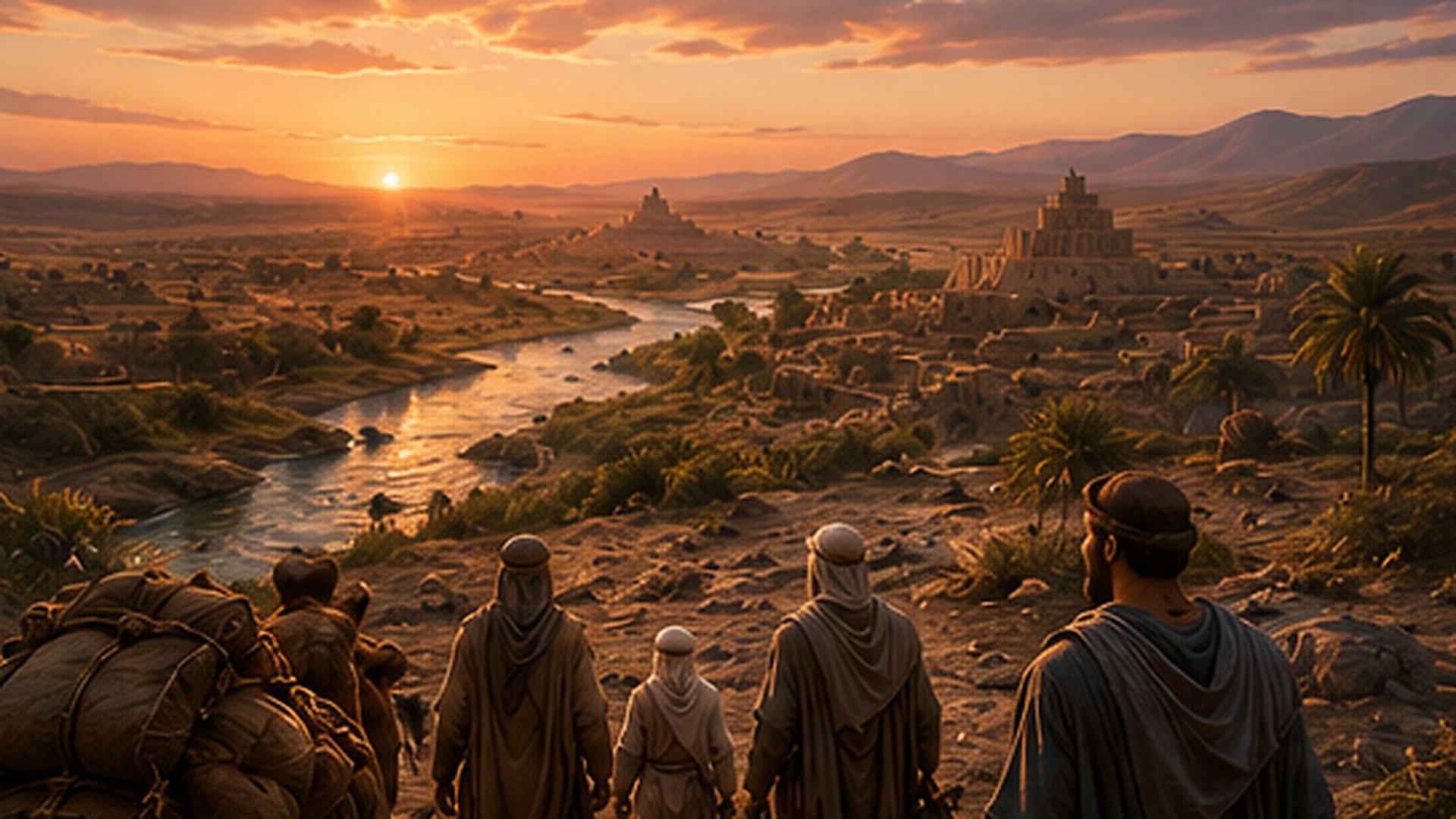
Terah’s Household, Haran’s Death, Abram and Sarai, Lot, and the Journey from Ur Toward the Land of Canaan
Primary Scripture: Genesis 11:27–32
Editorial Preface — Reading Terah’s Household with Scripture First
Genesis 11:27–32 is a short passage, but it forms the doorway from the primeval history into the story of Abram. This article follows the text in its own order: Terah’s family, Haran’s death, Abram and Sarai, Sarai’s barrenness, the departure from Ur, the intended journey toward Canaan, settlement in Haran, and Terah’s death.
Our governing safeguard is especially important here: Genesis 12 may illuminate what follows, but we will not read the LORD’s later call of Abram backward into motives Genesis 11 does not state. What Scripture explicitly says will remain distinct from reasonable inference and later historical or theological interpretation.
What This Passage Shows
God’s unfolding purpose moves through real families, losses, journeys, and unfinished circumstances; Genesis 11 prepares the reader for Abram while keeping the LORD’s call and covenant promises in their proper place in the passage that follows.
Terah’s Household, Haran’s Death, and Lot’s Place in the Family
Genesis 11:27 opens a new section with the words, “These are the generations of Terah.” The genealogy that has moved from Shem through successive generations now becomes a family narrative. Scripture places Terah’s household before us because Abram, Nahor, Haran, Lot, Sarai, and Milcah will become important to the story that follows. The text itself, not speculation about the family, must govern our reading. Genesis names Terah’s three sons: Abram, Nahor, and Haran. They were already introduced at the end of the preceding genealogy, but Genesis 11:27 now begins to describe their relationships.
Haran is identified as the father of Lot. This brief statement matters because Lot will later travel with Abram and appear repeatedly in Genesis 12–19. At this point Scripture simply establishes the relationship. We should allow later passages to develop Lot’s story rather than reading later events backward into this first introduction.
Haran’s death occurred in Ur of the Chaldeans. Genesis identifies Ur as the family’s place of origin and later records their departure from it. Historical and archaeological discussions about ancient Ur may illuminate background, but they remain secondary to the biblical text. Genesis itself gives the location and the family connection; responsible study distinguishes that revelation from later reconstruction.
Abram and Sarai, Nahor and Milcah, and the Reality of Barrenness
Genesis 11:29 moves from Terah’s sons to their marriages. Abram’s wife is Sarai, and Nahor’s wife is Milcah. The verse brings women explicitly into the family narrative and prepares relationships that will matter throughout the patriarchal story. Scripture gives these names deliberately; faithful reading pays attention to them without reducing the passage to Abram alone. Sarai enters Scripture here as Abram’s wife. Genesis has not yet recorded the LORD’s call of Abram or the covenant promises that will later involve Abram and Sarai.
Milcah is identified as the daughter of Haran and the sister of Iscah, making her Haran’s daughter and Lot’s sister. She becomes Nahor’s wife. These family relationships will matter later when Abraham’s wider family becomes connected with the marriages of Isaac and Jacob. Genesis 11 establishes the relationships; later passages reveal their further significance.
The repetition in Genesis 11:30—Sarai was barren; she had no child—emphasizes the reality of her childlessness. In the larger canonical story, this condition will make God’s later promise of offspring all the more remarkable. But the order matters: first the need is stated; afterward God reveals His promise. Scripture teaches us to follow revelation in the sequence in which it is given.
Terah’s Household Journeys from Ur Toward Canaan
Genesis 11:31 records Terah taking Abram his son, Lot his grandson, and Sarai his daughter-in-law out of Ur of the Chaldeans. The verse identifies Terah as the one who takes the household on this journey. Genesis 11 does not state that Terah departed because he had received Abram’s later call, and we should not assign him a motive the passage does not reveal. The traveling household includes Abram, Sarai, and Lot. Haran has died, yet his son Lot remains connected with the family and travels with them. This movement establishes the human setting immediately preceding Genesis 12.
Genesis makes their destination explicit: they went forth together from Ur to go into the land of Canaan. Canaan therefore appears as the intended destination before Genesis 12 records the LORD’s command to Abram to go to the land He would show him. The text does not explain why Terah selected Canaan as the destination. We should preserve that silence rather than inventing a reason.
Genesis says that when they came to Haran, they dwelt there. The family that had left Ur for Canaan now settles short of the destination. This creates an important narrative threshold. The chapter closes with Terah in Haran; the next chapter will open with the LORD addressing Abram and commanding him to go.
Genesis 11:32 closes Terah’s life, recording his age and death in Haran. The verse brings the generations of Terah section to a solemn pause. Questions about the precise chronology of Terah’s age, Abram’s age, and the timing of Abram’s departure require careful comparison with Genesis 12:4 and Acts 7:2–4. Such harmonization should be handled responsibly without pretending that difficult chronological questions are simpler than the texts themselves.
The narrative has now moved from the nations to Shem, from Shem to Terah, and from Terah’s household toward Abram. Genesis 11:27–32 does not contain the covenant with Abram, but it deliberately places the people, relationships, places, loss, barrenness, and unfinished journey immediately before the LORD’s call. The stage is prepared; Genesis 12 will reveal what God says next. Within Genesis 11 itself, the redemptive story has not yet reached the covenant promises to Abram. Yet the completed canon allows us to see that this household stands at a decisive point in the line through which God’s promises will unfold.
Genesis 11 prepares the household from which Abram emerges. Genesis 12 will record God’s call and promise; the wider canon will trace the covenant line through Abraham and ultimately to Jesus Christ. The connection is canonical, while Genesis 11:27–32 itself remains the family narrative that prepares the transition.
Read Genesis 11:27–32 slowly before continuing into Genesis 12. Notice every person named: Terah, Abram, Nahor, Haran, Lot, Sarai, Milcah, and Iscah. Notice every place and movement: Ur of the Chaldeans, the intended journey toward Canaan, and the settlement in Haran. Notice also what the text does not yet contain: no recorded call of Abram and no covenant promise. Then read Genesis 12:1–9 and observe how decisively the LORD’s word moves the story forward.
Scripture Connections
A few important passages help place this passage within the wider witness of Scripture:
- Acts 7:2–4
Conclusion — What This Passage Shows
God’s unfolding purpose moves through real families, losses, journeys, and unfinished circumstances; Genesis 11 prepares the reader for Abram while keeping the LORD’s call and covenant promises in their proper place in the passage that follows. The genealogy becomes a family narrative as Genesis introduces Terah’s household, Sarai’s barrenness, and the unfinished journey from Ur toward Canaan, preparing for the LORD’s call of Abram.
Join the Conversation
After reading Genesis 11:27–32, what truth from this passage stands out most clearly to you, and how does it shape your understanding of God and His purposes?
Take a moment to reflect on the passage and share your thoughts in the comments below. Your reflection may encourage another reader in their own journey through God’s Word.
Go Deeper
This article is drawn from a fuller Platinum Study with deeper exposition, Scripture connections, key truths, and interpretive safeguards.