Genesis Journey · Study No. 13
God Remembered Noah — The Waters Recede and the Earth Is Renewed
God Remembers Noah, the Waters Recede, the Ark Rests, and Noah Worships the LORD
Genesis 8:1–22
Study Orientation
Study at a Glance
Primary Scripture
Genesis 8:1–22
Central Theme
God faithfully preserves Noah and those with him, causes the Flood waters to recede, brings them onto dry ground, receives Noah’s worship, and declares the continuing rhythms of the earth.
Central Truth
Genesis 8 moves from judgment toward preservation and restoration: God remembers Noah, governs the recession of the waters, commands life to go forth again, and receives Noah’s worship.
Journey Position
Genesis Journey · Study No. 13
Editorial Preface
Genesis 8:1–22 begins with the decisive words, “God remembered Noah.” The Flood waters had prevailed, but judgment was not the end of the story. God acts for Noah and every living creature with him in the ark: a wind passes over the earth, the waters recede, the ark rests, dry ground gradually appears, and at God’s command Noah and his household come out into a renewed world.
This study will remain governed by the wording and sequence of Genesis. When Scripture says that God “remembered” Noah, we will not treat this as though God had forgotten him; in biblical narrative, divine remembering signals God’s faithful action toward those within His purpose and promise. Where chronology is explicit, we will preserve it. Where later interpretations go beyond the text, we will distinguish them from what Genesis itself states.
CHAPTER 1
But God Remembered Noah
Genesis 8 opens with a great turning point: God remembered Noah, every living thing, and all the animals with him in the ark. The statement does not suggest a lapse in God’s knowledge. The narrative announces that God now acts toward those He preserved. The focus moves from waters prevailing over the earth to God bringing the judgment toward its appointed conclusion.
CHAPTER 2
God Made a Wind Pass Over the Earth
God causes a wind to pass over the earth, and the waters begin to subside. The change is attributed directly to God’s action. Genesis does not present the recession of the Flood as an independent natural development; the same God who announced and governed the judgment now governs the movement toward restoration.
CHAPTER 3
The Fountains and Windows Were Stopped
The fountains of the deep and the windows of heaven are stopped, and the rain from heaven is restrained. These expressions deliberately answer the opening of the waters described in Genesis 7. What had been released in judgment is now restrained by God, marking a clear reversal in the Flood narrative.
CHAPTER 4
The Waters Continually Receded
The waters return from the earth continually, and after one hundred and fifty days they have decreased. Genesis portrays recession as a process rather than an instantaneous disappearance. The chronology invites the reader to see Noah’s preservation as involving patient dependence upon God while the earth is gradually made habitable again.
CHAPTER 5
The Ark Rested on the Mountains of Ararat
In the seventh month, on the seventeenth day of the month, the ark comes to rest upon the mountains of Ararat. Scripture identifies a mountainous region rather than naming a particular modern summit. The central biblical claim is that the ark, which had been borne upon the waters, now rests as those waters continue to diminish.
CHAPTER 6
The Tops of the Mountains Were Seen
The waters continue decreasing until the tenth month, when the tops of the mountains become visible. The narrative records successive stages: the ark rests before the surrounding landscape is fully exposed. Genesis thereby emphasizes both the extent of the waters and the measured nature of their recession.
CHAPTER 7
Noah Opened the Window of the Ark
After forty days Noah opens the window he had made in the ark. This begins a sequence in which he observes the changing condition of the earth. Yet Noah does not finally leave merely because he judges the land ready; later in the chapter he waits for God’s explicit command to go out.
CHAPTER 8
Noah Sent Out the Raven
Noah sends out a raven, which goes to and fro until the waters are dried from the earth. Genesis reports the action without supplying symbolic meaning for the bird. A Scripture-led reading should therefore resist making speculative symbolism carry more weight than the text itself gives it.
CHAPTER 9
The Dove Found No Resting Place
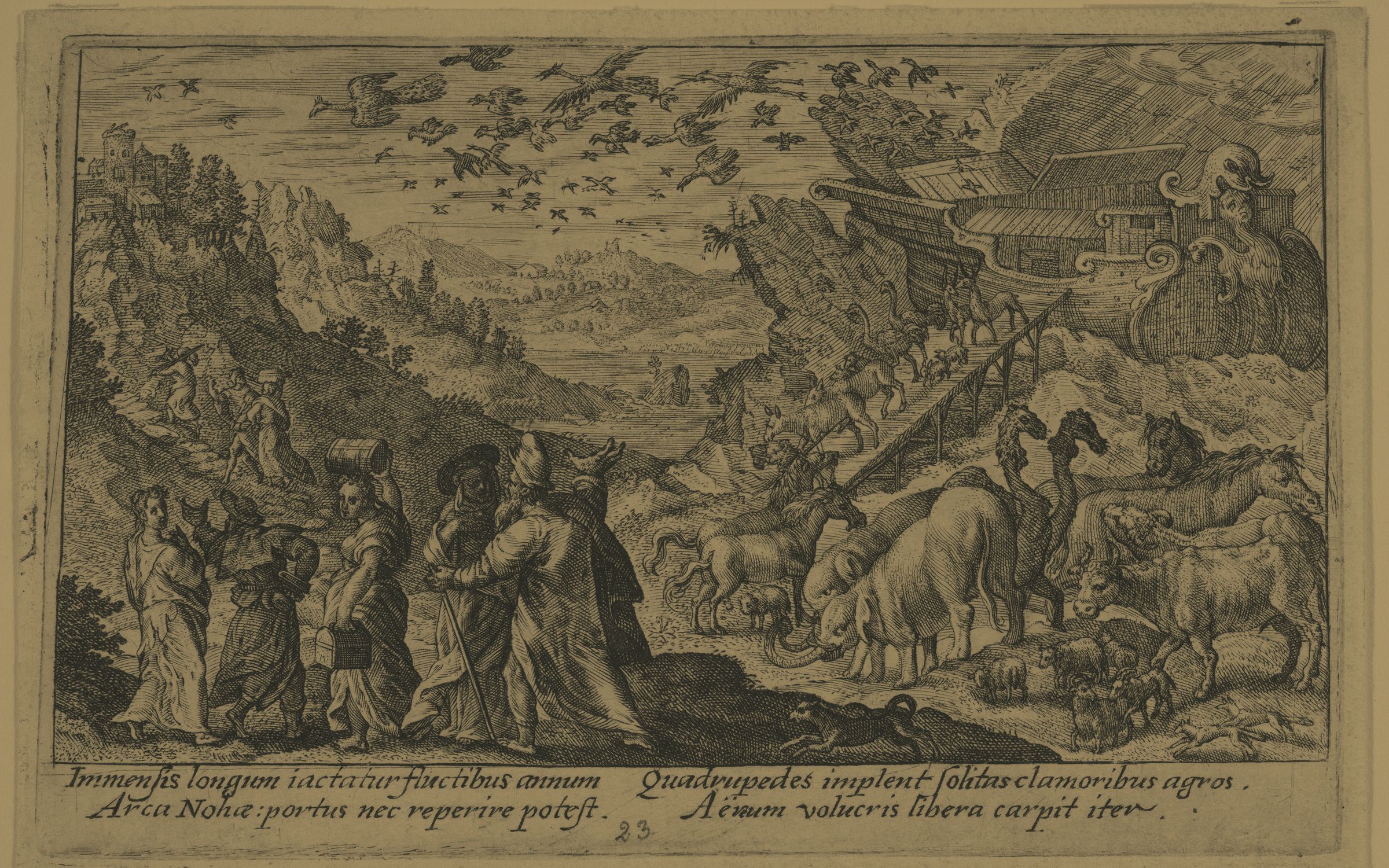
Noah then sends out a dove to learn whether the waters have subsided from the face of the ground. The dove finds no resting place and returns to the ark. Noah reaches out his hand, takes the dove, and brings it back inside. The earth is changing, but it is not yet ready.
CHAPTER 10
The Dove Returned With an Olive Leaf
After waiting another seven days, Noah sends the dove again. In the evening it returns with a freshly plucked olive leaf in its beak. Noah therefore knows that the waters have subsided from the earth. The small leaf becomes concrete evidence within the narrative that vegetation is again accessible above the receding waters.
CHAPTER 11
The Dove Did Not Return Again
Noah waits another seven days and sends out the dove once more. This time it does not return. The sequence displays Noah’s patience: observation comes in stages, separated by waiting. Even with this evidence, however, the narrative still distinguishes knowing that the waters have diminished from receiving God’s command to leave the ark.
CHAPTER 12
The Face of the Ground Was Dry
In Noah’s six hundred and first year, on the first day of the first month, the waters are dried from the earth. Noah removes the covering of the ark and sees that the face of the ground is dry. Genesis then gives a later date when the earth itself is described as dried out, carefully marking the progression toward a habitable world.
CHAPTER 13
God Commanded Noah to Go Out
God speaks to Noah and commands him to leave the ark with his wife, his sons, and his sons’ wives. He is also to bring out every living creature so that they may swarm, be fruitful, and multiply upon the earth. Noah entered at God’s command, and now he leaves at God’s command.
CHAPTER 14
Every Living Creature Went Forth
Noah, his household, the animals, birds, and creeping things go out from the ark according to their families. Preservation now gives way to renewed life upon the earth. The language of fruitfulness and multiplication recalls earlier creation themes, while Genesis still presents this as the continuation of the same world and human story after judgment.
CHAPTER 15
Noah Built an Altar to the LORD
Noah’s first recorded act after leaving the ark is to build an altar to the LORD. He takes from every clean animal and clean bird and offers burnt offerings. The distinction between clean and unclean animals, already present before the Flood, now has an immediate role in Noah’s worship. The narrative turns from preservation to grateful response before God.
CHAPTER 16
Seedtime and Harvest Shall Not Cease
The LORD receives Noah’s offering and declares that He will not again strike every living thing as He has done, even while acknowledging the continuing evil inclination of the human heart. While the earth remains, seedtime and harvest, cold and heat, summer and winter, day and night will not cease. Genesis 8 therefore closes with ordered earthly rhythms secured by God’s declared purpose, preparing for the covenant words of Genesis 9.
CONTINUE THE JOURNEY
From the Renewed Earth to God’s Covenant Sign
Genesis 8 ends with Noah worshiping and the LORD declaring the continuing order of the earth. Genesis 9 will carry the narrative forward into God’s blessing, His covenant with Noah and every living creature, and the sign of the bow in the cloud.