
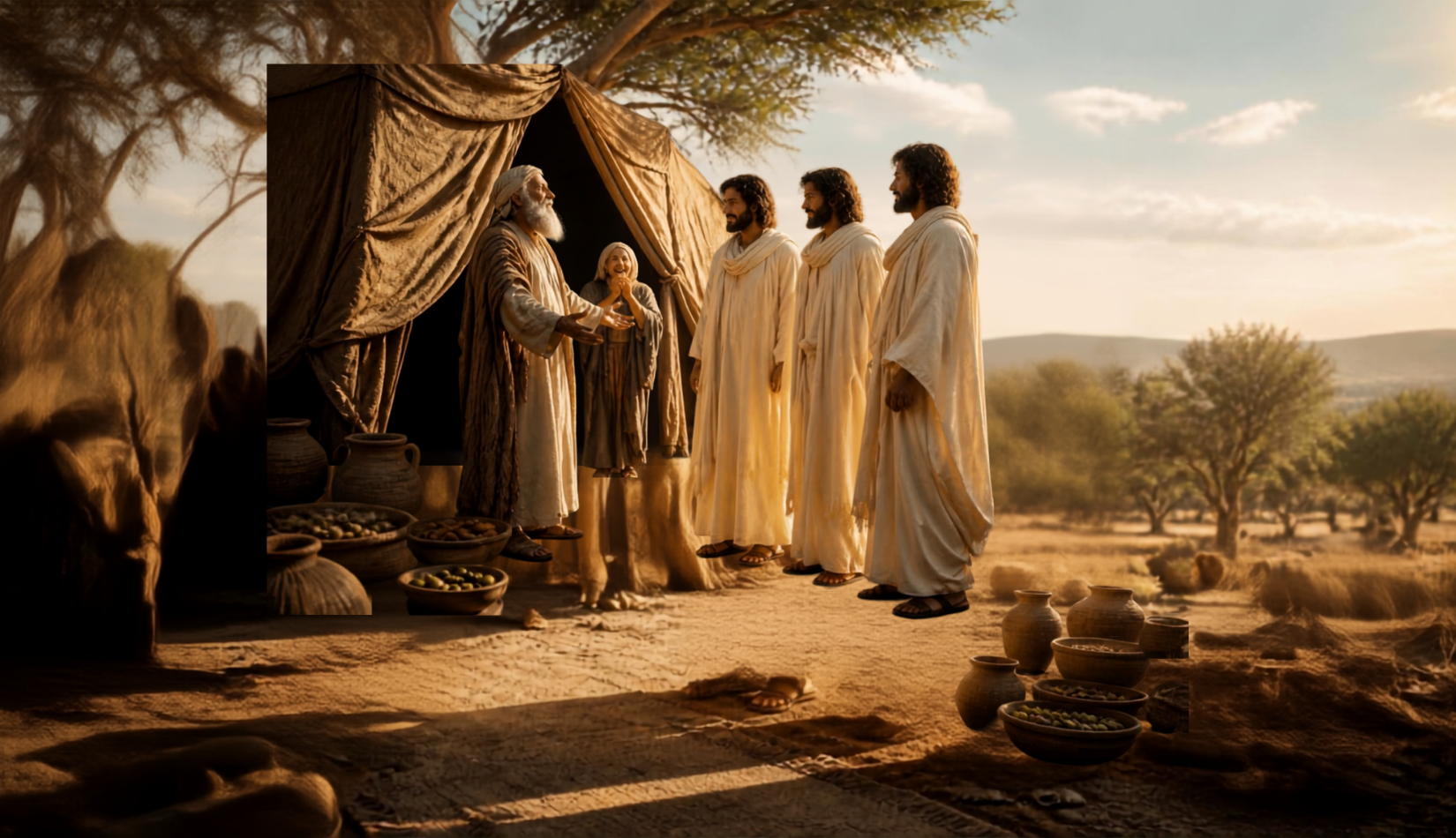
The LORD Appears at Mamre, Abraham Receives Three Visitors, Sarah Hears the Promise, and the LORD Declares That Nothing Is Too Hard for Him
Primary Scripture: Genesis 18:1–15
Editorial Preface — Reading Scripture First
Genesis 18 continues directly from the covenant declarations of Genesis 17. The LORD has already changed Abram's name to Abraham and Sarai's name to Sarah. He has explicitly declared that Sarah herself will bear Abraham a son. That son will be named Isaac. The covenant will be established with him. Genesis 18 now brings the promise closer.
The chapter begins: “And the LORD appeared unto him in the plains of Mamre.” — Genesis 18:1. Abraham is sitting at the door of his tent in the heat of the day when three men appear. The narrative moves through Abraham's hospitality before turning toward the central announcement:Sarah will have a son. This time Sarah hears the promise. And Sarah laughs. Her laughter gives the LORD's response extraordinary force: “Is any thing too hard for the LORD?” — Genesis 18:14. That question reaches beyond Sarah's circumstances. It directs attention away from human inability and toward the power of the One who made the promise. Our governing safeguard remains Scripture first. We will follow the narrative in its own order, distinguish what Genesis explicitly states from reasonable inference, and avoid claiming more about the identity of the visitors than the text itself warrants at each stage.
What This Passage Shows
God's promises do not depend upon human strength or natural possibility. What Abraham and Sarah cannot accomplish by their own ability remains entirely within the power of God. Genesis 18:1–15 moves the promise of Isaac closer to fulfillment and teaches us to measure apparent impossibility not by human limitation, but by the faithfulness and power of the LORD.
The LORD Appears to Abraham at Mamre
Genesis begins the scene with an unmistakable declaration:
“And the LORD appeared unto him in the plains of Mamre.” — Genesis 18:1
The subject of the encounter is therefore established before the visitors are described. Abraham is sitting at the door of his tent during the heat of the day. Mamre has appeared previously in Abraham's journey. After separating from Lot, Abram dwelt by the oaks of Mamre near Hebron and built an altar unto the LORD there. Now this familiar location becomes the setting of another divine encounter. We should allow the narrative to reveal their significance progressively rather than forcing conclusions upon the opening verse. What Scripture explicitly tells us first is enough: The covenant story is continuing under God's initiative.
Genesis 17 ended with Abraham obeying God's covenant command. Genesis 18 begins not with Abraham searching for God, but with the LORD appearing to him. Once again, the covenant story advances because God acts.
“and, lo, three men stood by him.” — Genesis 18:2
When Abraham sees them, he runs from the tent door to meet them and bows himself toward the ground. Genesis 18:1 has already told the reader that the LORD appeared to Abraham. As the conversation develops, the narrative will distinguish the LORD's speech within the encounter. We should therefore follow Genesis itself rather than beginning with speculation. The action is striking because Genesis has just reminded us that Abraham is ninety-nine years old. Before the great announcement concerning Sarah comes, Scripture pauses over Abraham receiving those who have arrived at his dwelling.
The woman preparing bread inside the tent is the very woman whom God has declared will bear the covenant son. Abraham runs to the herd, selects a tender and good calf, and gives it to a young man who prepares it. He then sets before the visitors butter, milk, and the prepared calf. What began as an offer of “a morsel of bread” has become a substantial meal. The text does not explicitly tell us Abraham's motive beyond receiving the visitors. Genesis tells us that Abraham stands by the visitors beneath the tree while they eat. Sarah has been preparing the meal away from the immediate conversation.
This matters greatly in the developing Genesis narrative. The promise is not moving away from Sarah.
“I will certainly return unto thee according to the time of life; and, lo, Sarah thy wife shall have a son.” — Genesis 18:10
Genesis 17 identified Sarah as the mother and Isaac as the son. Genesis 18 repeats the promise in Sarah's hearing. The promise is moving from general expectation toward approaching fulfillment.
“Now Abraham and Sarah were old and well stricken in age.” — Genesis 18:11
The promise will not be fulfilled because Abraham and Sarah eventually discover sufficient human strength. The promise rests upon the faithfulness of the One who gave it—not upon flawless human response.
Sarah Laughs, and the LORD Answers Her Doubt
What Sarah considers privately is known to God. The LORD does not merely identify the laughter. The LORD's answer comes in the next verse. This is the theological center of the passage: It places Sarah's age beside the power of the LORD. If fulfillment depended entirely upon Sarah's natural ability, her circumstances would settle the matter.
“Ah Lord God! There is nothing too hard for thee.” — Jeremiah 32:17
But delay has never meant that God's promise lacks a time of fulfillment. Genesis does not present God as improvising because circumstances have become difficult. But Genesis repeatedly demonstrates that God's timetable is not governed by human impatience. Genesis refuses to let the reader lose sight of the central declaration. Genesis 18 therefore strengthens the continuity of the covenant narrative. The text tells us why: she was afraid. We do not need to soften the account. Nor should we use it to dismiss Sarah's entire life of faith. The Bible is capable of recording both human weakness and genuine faith.
Sarah Hears the Promise of a Son
This passage illustrates something Scripture will affirm repeatedly: Sarah's failure does not cause God to say that another woman will now bear the promised son.
“Through faith also Sara herself received strength to conceive seed.” — Hebrews 11:11
Together they give us a fuller biblical portrait. Faith does not mean that Sarah never struggled. It means that her story ultimately testifies to trust in the faithfulness of the One who promised.
“And the LORD visited Sarah as he had said, and the LORD did unto Sarah as he had spoken.” — Genesis 21:1
Those words provide one of the clearest summaries of the entire promise narrative: Isaac's birth will demonstrate that God's word has reached fulfillment. Genesis 18 is therefore not merely about a miraculous future birth. It is about the reliability of God's word. What He has spoken, He is able to perform. The New Testament returns to Abraham and Sarah when teaching about faith. Romans emphasizes Abraham's confidence that God was able to perform what He had promised. And Genesis will soon show that He does exactly that.
Scripture Connections
A few important passages help place this passage within the wider witness of Scripture:
- Hebrews 11:11
- Jeremiah 32:17
- Romans 4:18–21
- Jeremiah 32:27
Conclusion — What This Passage Shows
The LORD appears to Abraham by the oaks of Mamre, where Abraham receives three visitors with generous hospitality. During the encounter, the LORD announces that Sarah will have a son at the appointed time. Sarah laughs within herself because of her age, but the LORD exposes her hidden laughter and answers the apparent impossibility with the defining question: “Is any thing too hard for the LORD?”
Join the Conversation
After reading Genesis 18:1–15, what truth from this passage stands out most clearly to you, and how does it shape your understanding of God and His purposes?
Take a moment to reflect on the passage and share your thoughts in the comments below. Your reflection may encourage another reader in their own journey through God’s Word.
Go Deeper
This article is drawn from a fuller Platinum Study with deeper exposition, Scripture connections, key truths, and interpretive safeguards.