
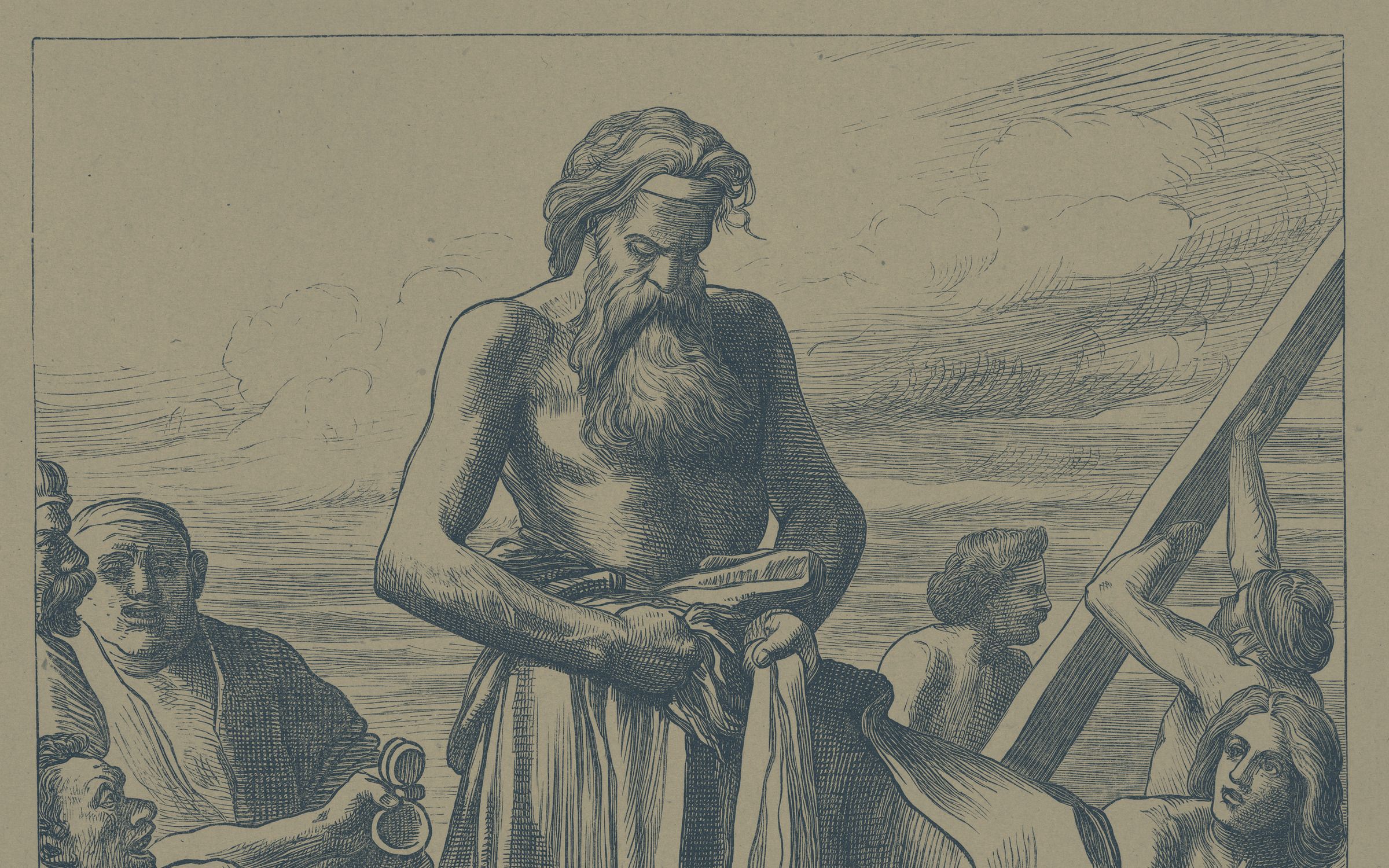
The Sons of God, Human Wickedness, God’s Grief, Coming Judgment, and Noah Finding Favor
Primary Scripture: Genesis 6:1–8
Editorial Preface
Genesis 6:1–8 moves from the generations of Adam into a sobering description of humanity before the Flood. Human beings multiply, a difficult episode involving “the sons of God” and “the daughters of men” is recorded, and the LORD sees that human wickedness has become great upon the earth. The passage culminates in divine judgment, yet it closes with a sentence of hope: Noah finds favor in the eyes of the LORD.
This article will keep Scripture in the governing position. Genesis 6:1–4 has produced several major interpretations across Jewish and Christian history. We will distinguish what the text explicitly states from reasonable inference and later interpretation. Where Scripture does not settle an identification beyond dispute, we will not present one view as though the biblical text explicitly names it.
What This Passage Shows
Genesis 6:1–8 reveals the seriousness of human sin and the holy grief of God while introducing Noah as the recipient of divine favor before the Flood narrative unfolds.
Humanity Multiplies and the Sons of God
Genesis 6 begins by saying that mankind began to multiply on the face of the land and daughters were born to them. This continues the growth of the human family already traced through Genesis 4 and 5. Multiplication itself is not presented as the problem; the passage quickly turns from population growth to relationships, human desire, and the deepening corruption that God sees.
Genesis 6:2 says that “the sons of God” saw that “the daughters of men” were attractive and took as wives any they chose. Those expressions have generated extensive debate. The verse itself clearly describes seeing, desiring, and taking. Careful interpretation begins there, without adding identities or motives that the verse itself does not explicitly supply.
The text gives several firm anchors: humanity is multiplying; daughters are born; figures called the sons of God see the daughters of men; they take wives from those they choose; the LORD then speaks concerning man; and Genesis 6:4 mentions the Nephilim and mighty men of old. These statements are explicit. The precise identity of the sons of God is not directly defined within Genesis 6:1–4 itself, so our certainty should not exceed the wording of Scripture.
Three broad interpretations have commonly been proposed. One understands the sons of God as heavenly beings; another understands them as descendants associated with Seth who intermarry with women from another human line; a third connects the expression with powerful rulers or warrior-kings. Each view attempts to account for the language and context, but none should be labeled as an explicit identification made by Genesis itself. Our task is to understand the options while allowing the inspired text to retain the final authority.
The Nephilim and the Limit God Declares
Genesis 6:4 says that the Nephilim were on the earth in those days—and also afterward—and associates the period with mighty men of old, men of renown. Numbers 13:33 later uses the term Nephilim in the report of the spies. Genesis does not provide a detailed biological explanation of the Nephilim, and it does not justify the many elaborate stories later built around them. We should preserve the mystery where Scripture preserves it.
In Genesis 6:3 the LORD declares that His Spirit will not contend or abide with man forever, for man is flesh, and that his days shall be 120 years. Interpreters differ over whether the 120 years refers to a countdown before the Flood or a limitation associated with human lifespan. The verse clearly communicates divine limitation and the seriousness of the human condition; where the precise application is disputed, this passage should acknowledge that distinction rather than manufacture certainty.
Human Wickedness and the Grief of God
Genesis 6:5 shifts the emphasis decisively to God’s evaluation: the LORD sees that the wickedness of man is great in the earth. The standard is not merely human comparison or cultural achievement. God sees the true moral condition of humanity. The verse prepares the reader to understand why judgment is coming.
The diagnosis reaches inward. Genesis 6:5 says that every intention of the thoughts of the human heart was only evil continually. Scripture therefore describes more than isolated outward wrongdoing. The corruption has reached human thought and desire. The language is deliberately comprehensive and shows the depth of the crisis before the Flood.
The closing words of Genesis 6:5 intensify the description: evil is not portrayed as an occasional interruption but as a continual orientation. This does not require us to invent sins the passage does not list. The inspired evaluation itself is sufficient. Humanity has reached a condition that Genesis presents as deserving divine judgment.
Genesis 6:6 says that the LORD regretted that He had made man on the earth. This language must be allowed to communicate the seriousness of God’s response without forcing it into a simplistic picture of God discovering a mistake. Elsewhere Scripture speaks clearly of God’s knowledge, purpose, and faithfulness. Here Genesis uses deeply personal language to reveal God’s response to the evil of His creatures.
The same verse says that humanity’s condition grieved God to His heart. The biblical portrayal of judgment is therefore not cold indifference. Human wickedness matters to the Creator. Genesis places divine grief immediately before the announcement of judgment, showing that the coming destruction is connected to the profound moral corruption God sees.
Judgment Is Announced, but Noah Finds Favor
Genesis 6:7 records the LORD’s declaration that He will blot out man whom He created from the face of the land, together with animals, creeping things, and birds. The language reaches back to creation while announcing a devastating reversal. The Creator who gave life now declares judgment upon a world corrupted by human wickedness. The Flood narrative that follows will explain how this judgment is carried out.
Against the darkness of Genesis 6:1–7, verse 8 changes the direction of the narrative: “But Noah found favor in the eyes of the LORD.” The text does not yet give the fuller description of Noah that appears in verse 9. At this point the emphasis rests upon favor found before God. Genesis 6:1–8 has established the crisis. Humanity has multiplied, wickedness has become great, the human heart is described as continually inclined toward evil, God is grieved, and judgment is announced. Yet Noah has found favor. Genesis 6:9 will now begin the account of Noah and describe the man through whom God will preserve life during the coming Flood.
Scripture Connections
A few important passages help place this passage within the wider witness of Scripture:
- Numbers 13:33
Conclusion — The Justice and Mercy of God
Genesis 6:1–8 brings us back to the central truth of the passage: Genesis 6:1–8 reveals the seriousness of human sin and the holy grief of God while introducing Noah as the recipient of divine favor before the Flood narrative unfolds. This passage calls us to take both God’s holiness and His mercy seriously. Scripture does not present His judgment as careless or arbitrary, but as part of His righteous dealing with sin. The reader is therefore invited to respond with reverence, humility, and renewed trust in the Judge of all the earth.
Join the Conversation
After reading this passage, what stands out most to you about God’s justice, mercy, and holiness, and how does that truth call you to respond?
Take a moment to reflect on the passage and share your thoughts in the comments below. Your reflection may encourage another reader in their own journey through God’s Word.
Go Deeper
This article is drawn from a fuller Platinum Study with deeper exposition, Scripture connections, key truths, and interpretive safeguards.