Genesis Journey · Study No. 33
Abraham and Abimelech — God Preserves Sarah in Gerar
Abraham Again Calls Sarah His Sister, God Warns Abimelech, and the Promised Line Is Preserved
Genesis 20:1–18
Study Orientation
Study at a Glance
Primary Scripture
Genesis 20:1–18
Central Theme
Abraham's fear again places Sarah in danger, but God intervenes in Gerar to preserve her, restrain Abimelech from sin, and protect the covenant family through whom the promised son will soon be born.
Central Truth
Genesis 20 demonstrates that the fulfillment of God's promise ultimately rests upon God's faithfulness rather than human consistency. Abraham's recurring fear exposes his weakness, while God's intervention protects Sarah, preserves Abimelech from unknowingly sinning against Him, and safeguards the covenant line immediately before Isaac's birth.
Journey Position
Genesis Journey · Study No. 33
God's Faithfulness amid Human Weakness
Genesis 20 records an uncomfortable repetition in Abraham's journey. Once again, Abraham identifies Sarah as his sister because he fears for his life. Yet the chapter directs attention beyond Abraham's failure to God's active preservation of His promise. This study will remain close to what the text explicitly states, carefully distinguishing Scripture from reasonable inference and later interpretation as we examine God's warning to Abimelech, Sarah's preservation, Abraham's explanation, and the restoration that follows.
CHAPTER 1
Abraham Journeys Toward the Negev
Genesis 20:1
Abraham leaves the region where he had previously dwelt and journeys south toward the Negev. He settles between Kadesh and Shur and then stays for a time in Gerar.
Genesis gives no explicit reason for this movement. We should therefore resist assigning motives the text does not provide.
What Scripture does show is that Abraham's covenant journey continues. He remains a sojourner, moving through lands that God has promised ultimately to give to his descendants.
The geographical movement also introduces a new setting and a new ruler: Abimelech king of Gerar.
CHAPTER 2
Abraham Calls Sarah His Sister
Genesis 20:2
In Gerar, Abraham says of Sarah:
“She is my sister.”
Abimelech therefore sends for Sarah and takes her.
The event immediately recalls Genesis 12:10–20, when Abraham used a similar strategy concerning Sarah in Egypt.
The repetition is significant. Abraham has experienced extraordinary encounters with God, received covenant promises, and witnessed God's judgment upon Sodom. Yet he remains capable of returning to an old pattern of fear.
Spiritual growth in Scripture does not mean that God's servants cease being vulnerable to previous weaknesses.
CHAPTER 3
Sarah Is Taken into Abimelech's Household
Abraham's statement places Sarah in a dangerous position.
From Abimelech's perspective, Abraham has represented Sarah as available. Yet the reader knows something Abimelech apparently does not fully understand: Sarah occupies a crucial place in God's covenant promise.
God has already declared that Sarah will bear Abraham a son.
Genesis 17:21 identifies Isaac specifically as the son through whom God will establish His covenant.
Therefore Sarah's preservation matters not merely personally but within the unfolding covenant story.
CHAPTER 4
God Comes to Abimelech in a Dream
Genesis 20:3
God intervenes directly.
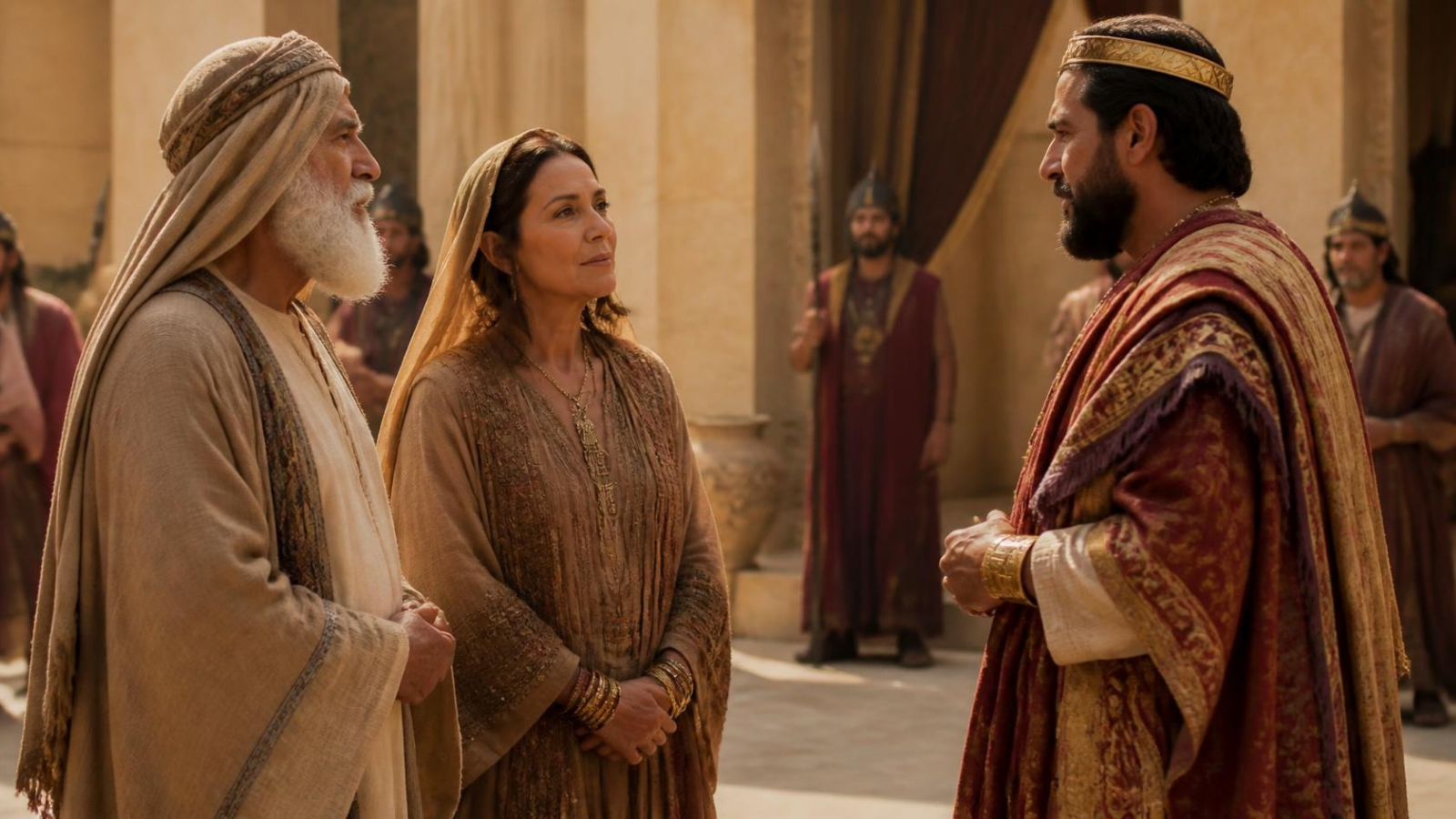
He comes to Abimelech in a dream by night and warns him that he is in mortal danger because the woman he has taken is another man's wife.
The narrative shifts immediately from human decisions to divine intervention.
Abraham's strategy has created the crisis.
God acts to prevent that crisis from destroying what He has promised.
The covenant promise is not preserved because Abraham has handled the situation perfectly. It is preserved because God remains faithful.
CHAPTER 5
Abimelech Had Not Approached Sarah
Genesis 20:4
Scripture explicitly tells us:
“But Abimelech had not come near her.”
This statement is extremely important.
The text removes ambiguity concerning what occurred after Sarah entered Abimelech's household.
God intervened before a sexual relationship took place.
This explicit statement should govern our interpretation rather than speculation about events the passage does not describe.
CHAPTER 6
“Wilt Thou Slay Also a Righteous Nation?”
Abimelech responds to God's warning by asking whether God will destroy a nation that is innocent in this matter.
His language is especially striking after Genesis 18–19.
Abraham had previously asked:
“Shall not the Judge of all the earth do right?”
— Genesis 18:25
Now another ruler raises a question concerning divine justice.
But unlike Sodom, whose wickedness had been established before judgment, Abimelech explains that he acted according to the information given to him.
The passage again presents God as a Judge who knows the actual circumstances of human actions.
CHAPTER 7
Abimelech Pleads His Integrity
Genesis 20:5
Abimelech explains:
Abraham told him Sarah was his sister.
Sarah herself said Abraham was her brother.
Therefore Abimelech declares that he acted in the integrity of his heart and innocence of his hands.
This does not mean Abimelech is being declared universally righteous.
His statement concerns this particular action.
That distinction matters.
Scripture evaluates the specific circumstances rather than inviting us to make claims beyond what the passage establishes.
CHAPTER 8
God Acknowledges Abimelech's Integrity
Genesis 20:6
God replies:
“Yea, I know that thou didst this in the integrity of thy heart.”
This is remarkable.
God acknowledges Abimelech's lack of deliberate wrongdoing in taking Sarah.
The LORD knows not merely what people do but what they know, intend, and understand when they act.
The passage therefore reveals something important about divine judgment: God's assessment is based upon perfect knowledge.
CHAPTER 9
“I Also Withheld Thee from Sinning Against Me”
God then reveals something Abimelech himself could not have known:
“I also withheld thee from sinning against me.”
Abimelech had not touched Sarah—but God's restraint was part of the reason.
This introduces an important biblical truth.
Divine mercy sometimes appears not only in forgiveness after sin but in God's restraint preventing a person from committing the sin in the first place.
God's intervention protects Sarah while simultaneously protecting Abimelech.
CHAPTER 10
Restore the Man His Wife
Genesis 20:7
God commands Abimelech to restore Sarah to Abraham.
There can be no ambiguity about the required response.
Sarah belongs with her husband.
God also identifies Abraham as:
“a prophet.”
This is the first explicit occurrence of the word prophet in Scripture.
Yet its first application is surprising.
Abraham has just acted out of fear.
Nevertheless, God's calling upon Abraham has not disappeared because Abraham has failed.
CHAPTER 11
Abraham Will Pray for Abimelech
God tells Abimelech that Abraham:
“shall pray for thee, and thou shalt live.”
The man whose actions helped create the crisis is now instructed to intercede for the household affected by it.
This does not excuse Abraham.
Instead, it demonstrates the strange grace visible throughout Genesis: God continues working through imperfect people whom He has called.
Abraham's prophetic role includes intercession.
This also recalls Abraham's earlier intercession concerning Sodom.
CHAPTER 12
Abimelech Responds Immediately
Genesis 20:8
Abimelech rises early in the morning.
He calls his servants and tells them everything that God has revealed.
The men become greatly afraid.
His response contrasts with many biblical examples where divine warnings are ignored.
Abimelech takes the warning seriously.
The proper response to God's revealed word is not delay but obedience.
CHAPTER 13
Abimelech Confronts Abraham
Genesis 20:9
Abimelech summons Abraham and asks:
“What hast thou done unto us?”
The roles in the narrative are uncomfortable.
The pagan king confronts the covenant patriarch about conduct that endangered his household and kingdom.
Abraham's calling does not place him beyond accountability.
Scripture does not hide the failures of its major figures.
That honesty is one reason we must allow biblical characters to be portrayed as Scripture portrays them rather than idealizing them.
CHAPTER 14
“What Sawest Thou?”
Genesis 20:10
Abimelech asks Abraham what he saw that caused him to behave this way.
The question moves from Abraham's action to Abraham's reasoning.
Why did he believe deception was necessary?
Abraham's answer reveals that his decisions were driven by assumptions about the people around him.
Fear shaped his judgment before the danger he anticipated had actually occurred.
CHAPTER 15
Abraham Explains His Fear
Genesis 20:11
Abraham says:
“Surely the fear of God is not in this place; and they will slay me for my wife's sake.”
This is Abraham's assessment of Gerar.
But the narrative creates an irony.
Abraham feared that the people of Gerar lacked the fear of God, yet when Abimelech and his servants hear God's warning, they become afraid and respond.
Abraham's assumption about others contributed directly to his own failure.
Fear can distort our assessment of circumstances.
CHAPTER 16
Sarah Was Truly Abraham's Half-Sister
Genesis 20:12
Abraham explains that Sarah really is his sister:
“she is the daughter of my father, but not the daughter of my mother; and she became my wife.”
Therefore Abraham's statement contained factual truth.
But it concealed the most important relational fact: Sarah was also his wife.
Genesis therefore shows how technically accurate information can still be used misleadingly when essential truth is withheld.
Truthfulness involves more than selecting facts that protect us.
CHAPTER 17
The Agreement between Abraham and Sarah
Genesis 20:13
Abraham reveals that when God caused him to wander from his father's house, he asked Sarah to show him kindness by saying wherever they travelled:
“He is my brother.”
This shows that the strategy was not invented suddenly at Gerar.
It was an established arrangement.
That helps explain why the same pattern appeared earlier in Egypt.
Abraham's fear had developed into a recurring strategy of self-protection.
God's continuing work in Abraham's life therefore includes confronting patterns that covenant experience had not yet fully corrected.
CHAPTER 18
Abimelech Restores Sarah
Genesis 20:14–16
Abimelech responds generously.
He gives Abraham sheep, oxen, male servants, and female servants and restores Sarah to him.
He also tells Abraham that the land is before him and that he may dwell wherever he chooses.
Abimelech additionally gives Abraham a thousand pieces of silver in connection with Sarah's vindication before those with her.
The crisis created by Abraham's fear ends not with Sarah harmed, but with Sarah restored.
God's preserving hand has governed the outcome.
CHAPTER 19
Abraham Prays and God Heals
Genesis 20:17–18
Abraham prays to God.
God heals Abimelech, his wife, and his female servants so that they can bear children again.
Genesis explains that the LORD had closed the wombs of Abimelech's household because of Sarah.
The chapter therefore ends with restoration.
Sarah is restored to Abraham.
Abimelech's household is restored.
Abraham resumes his intercessory role.
And immediately after this chapter, Genesis turns to the birth long promised:
Isaac.
That literary sequence is important.
The promised son's arrival in Genesis 21 follows directly after God's preservation of Sarah in Genesis 20.
CHAPTER 20
Key Truths and Scripture Connections
Key Truths
1. God's promise rests upon God's faithfulness.
Abraham's weakness does not overthrow what God has promised. God intervenes to preserve Sarah immediately before Isaac's birth.
2. Scripture does not conceal the failures of God's servants.
Abraham's great faith and genuine failures are both recorded. Biblical faithfulness requires allowing both to stand.
3. God knows intention as well as action.
God acknowledges that Abimelech acted without knowing Sarah was Abraham's wife.
4. God can restrain people from sin.
God explicitly tells Abimelech that He prevented him from touching Sarah.
5. Calling does not equal perfection.
Abraham is called a prophet in the very chapter that exposes one of his recurring weaknesses.
6. God's mercy works toward restoration.
Sarah is restored, Abimelech's household is healed, and the covenant journey continues.
Scripture Connections
Genesis 12:10–20 — Abraham's earlier experience with Sarah in Egypt provides an important parallel.
Genesis 17:15–21 — God specifically promises that Sarah will bear Isaac and that the covenant will be established through him.
Genesis 18:10–14 — The LORD announces that Sarah will have a son at the appointed time.
Genesis 18:22–33 — Abraham's intercession concerning Sodom anticipates his intercessory role in Genesis 20.
Genesis 21:1–7 — Immediately following the Gerar account, the LORD fulfills His word and Sarah gives birth to Isaac.
Psalm 105:12–15 — In recalling the patriarchal period, the Psalm celebrates God's protection of those through whom His promises were unfolding.
Scripture / Inference / Interpretation Safeguard
Scripture Explicitly States
Abraham called Sarah his sister.
Abimelech took Sarah.
Abimelech had not approached her sexually.
God warned Abimelech in a dream.
God said He had restrained Abimelech from sinning.
Sarah was restored to Abraham.
Abraham prayed.
God healed Abimelech's household.
Reasonable Biblical Inference
Because Genesis 17–18 has already identified Sarah as the mother of the promised son, God's preservation of Sarah in Genesis 20 protects the circumstances surrounding the covenant promise that will be fulfilled with Isaac's birth in Genesis 21.
This inference arises naturally from the immediate narrative sequence, although Genesis 20 does not explicitly state, “God intervened because Isaac was about to be born.”
Later Interpretation or Tradition
Questions concerning every possible motive behind Abraham's actions, additional details about Abimelech, or events not described by Genesis should not be presented as established biblical facts.
Where Scripture is silent, this study remains appropriately cautious.
CONTINUE THE JOURNEY
The Promised Son Arrives
God has preserved Sarah through the crisis in Gerar, and the narrative now reaches one of the great moments in Abraham's journey. The promise repeatedly spoken by God is about to become visible in history. In Genesis 21, the LORD visits Sarah as He had said, and Isaac—the long-awaited son of promise—is born.
Next Study:
Genesis Study No. 34 — Isaac Is Born — The LORD Fulfills His Promise to Abraham and Sarah