The Seven Days Of Creation
Understanding the story of the seven days of creation is like exploring a mix of the world’s oldest ideas about time, life, and how everything came to be. Whether it’s in the pages of Genesis in the Bible or echoed in other traditions, this account isn’t just a tale—it’s a cornerstone of belief systems that have shaped cultures and societies for millennia.
Have you ever wondered what the world looked like before anything existed – before light, land, oceans, stars, or even time itself?
Diving into this narrative, we find a world being pulled together from chaos into order, day by day. It’s not just about what was made, but also about the ‘why’ behind it. Why did light come before creatures, or land before life? Each choice in this sequence says something about the values and beliefs of the people who shared these stories over generations.
For many, this creation narrative is more than just a collection of words. It’s a powerful historical document offering insight into early human attempts to explain our origins and purpose. By understanding its place in cultural and religious traditions, we appreciate how alive and influential these stories remain even today.
As we unwrap each day of creation, think of yourself not just as a reader, but as an explorer seeking the deeper meanings and implications of these ancient accounts. From theologically rich interpretations to historical and scientific perspectives, there’s much to uncover that can inspire awe and offer wisdom for how we view the world around us.
To understand the seven days of creation, let’s explore each day’s event according to the Word of the Almighty GOD.
- Day 1: Introduces light, symbolizing beginnings, enlightenment, and clarity.
- Day 2: Separates sky and waters, establishing space, structure, and conditions for life.
- Day 3: Forms land, seas, and vegetation, laying foundations for biodiversity and ecosystems.
- Day 4: Brings sun, moon, and stars, marking time, seasons, and cosmic order.
- Day 5: Fills air and sea with living creatures, highlighting diversity and balance.
- Day 6: Creates land animals and humanity, emphasizing stewardship and responsibility.
- Day 7: Establishes rest, symbolizing completion, reflection, balance, and renewal.
Day 1: Let There Be Light

The journey starts with light bursting into existence, shattering darkness. This isn’t just a world lighting up; it’s a powerful symbol of enlightenment, knowledge, and life itself. For many cultures, light is synonymous with understanding, clarity, and the divine.
Breaking this down, the idea of light coming first can be looked at in several ways.
- Theologically, it represents the beginning of divine order. Light not only allows other things to be seen, but it also signifies the beginning of creation, a first step towards structuring the chaos.
- But what about science? Well, even in scientific theories like the Big Bang, light plays a crucial role as the universe expanded and cooled. Light here means the release of photons that started our universe’s journey as we know it. This scientific perspective brings a unique angle to understanding why ‘light’ is such a pivotal concept.
When you explore the symbolism of light, think about how it manifests in daily life—it’s warmth and safety, it drives our cycle of living. It’s fascinating to see how this early reference still resonates deeply in philosophical and scientific discussions today.
So, whether in a spiritual sense or in our scientific understanding of the universe, light continues to be an enduring symbol of new beginnings and endless possibilities.
Day 2: The Sky and Waters

Day two paints the picture of a world under construction, with the sky stretching above and waters pooling below. This separation of sky and water sets a stage for everything else to come, creating spaces for life to flourish and grow.
Let’s break it down: creating the firmament—a vast expanse separating the waters above from those below—not only gives structure but introduces an essential element to life on Earth. The sky isn’t just an empty space; it’s critical for our atmosphere and for nurturing conditions that allow life forms to thrive.
Symbolically, the sky often represents vastness and freedom but can also be seen as a barrier between humans and the divine. Throughout history, many cultures have looked to the heavens as a source of wonder and inspiration. It’s fascinating how these ancient ideas continue to infuse contemporary religious and philosophical thought with meaning.
From a scientific viewpoint, the formation of the sky and sea aligns with how we understand the Earth developing over millions of years. Our atmosphere—formed by volcanic outgassing and cometary impacts—created the conditions necessary for life. Earth’s oceans, pooling from early rains and comet ice, became the cradle of life, setting the stage for the next steps in creation.
So, when thinking about this day of creation, consider how it aligns two powerful elements—sky and water—and how their formation marks a pivotal step in the ongoing dance of life on Earth.
Day 3: Land, Sea, and Vegetation

The third day of creation brings with it the earth taking shape beneath a vast sky and alongside expansive waters. It’s the day that sees the land rising from the water, forming continents and cycles that set the stage for life.
The gathering of seas into one place allows dry ground to appear, introducing a structured world with oceans and land masses. This division isn’t just physical but also symbolic, representing the diversity and richness of the Earth’s biosphere. The idea of separating land and water suggests balance and a foundation for life to build upon.
Vegetation bursting forth on this day also marks Earth’s transition into a living world. Grasses, herbs, and fruit trees sprouting everywhere aren’t merely decorative—they’re vital for life, laying the groundwork for ecosystems and food chains. This development is essential for supporting future animal life, setting the entire ecological web into motion.
Look at this from a geological and botanical lens: the formation of solid land comes from tectonic activities that shaped mountains, valleys, and all the varied terrains we see. The introduction of plant life, over eons through photosynthesis, altered Earth’s atmosphere by adding oxygen, crucial for the animals and humans yet to come.
So when reflecting on this day, think about how it maps out a blueprint for Earth’s remarkable biodiversity. It’s all about creating a living canvas, rich in potential and ready for the next waves of creation.
Day 4: The Sun, Moon, and Stars
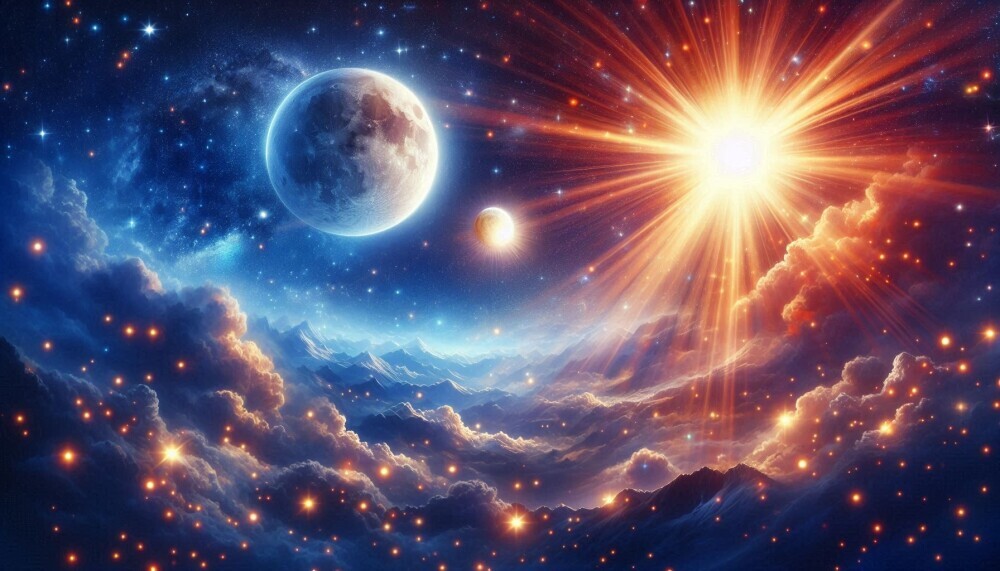
On the fourth day, the cosmos decorates the sky with celestial lights: the sun, moon, and stars. This day is about marking time and seasons, giving rhythm to the new world. These cosmic bodies not only illuminate the sky but also serve practical roles in the cycles of agriculture and human activity.
The placement of these lights is crucial as it structures the day and night, seasons, and years. The sun is the primary source of energy, driving the climate and facilitating life. Meanwhile, the moon’s phases influence tides and have long been part of human folklore and calendars. Stars not only guide travelers but have also inspired countless myths across cultures.
From a scientific angle, this day ties into the formation of our solar system, with the sun’s gravity holding planets in orbit. This celestial choreography offers insights into the vastness and intricacy of our universe. The sun’s formation, around 4.6 billion years ago, provided the stability necessary for life on Earth.
Astrology and mythology often found roots in these celestial entities. Many ancient cultures ascribed divine meanings to the regularity of the stars and planets, using them as symbols of gods, fate, and eternity. Such beliefs underscore the profound influence these celestial bodies have had not only on spiritual life but on the natural rhythms that guide humanity.
Considering this day brings appreciation of how connected we all are to these cosmic giants. They aren’t just distant observers of life on Earth but active participants in the environmental and cultural tapestry that sustains us.
Day 5: Creatures of Water and Air
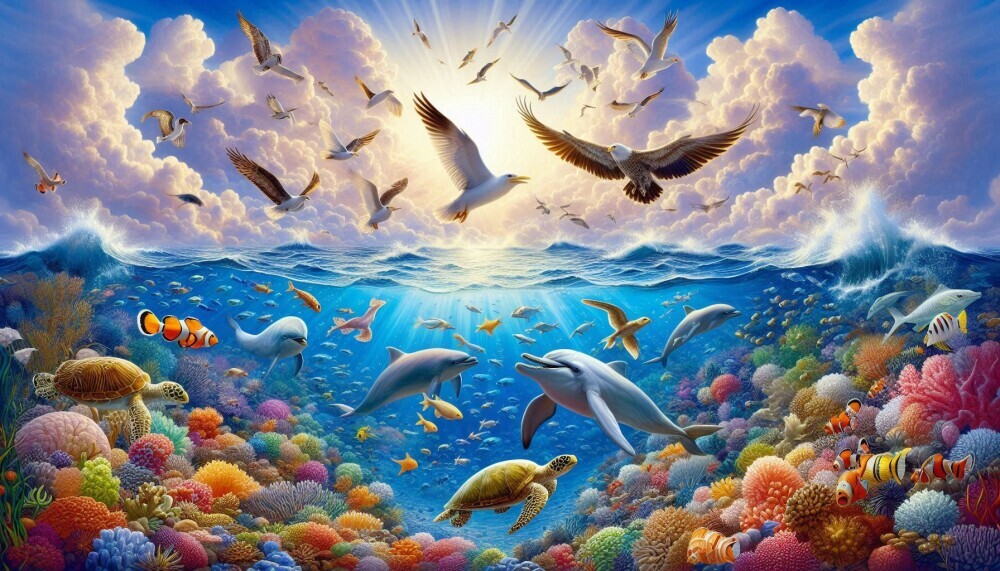
The fifth day dives into the marvels of life gliding through the oceans and soaring in the skies, with sea creatures and birds taking the center stage. This introduction of aquatic and aerial life fills Earth’s newly created environments with the hustle and bustle of biological diversity.
These creatures, populating water and sky, highlight a dynamic range of life forms that resemble the beauty and complexity of natural ecosystems. Their existence reveals the interconnectedness of life, where each species has a role, contributing to ecological balance and the web of food cycles.
In terms of symbolism, water often represents the origins of life, while air signifies freedom and expansion. Birds, often associated with transcendence, are seen as messengers between the heavens and Earth. Such interpretations enrich many cultural narratives and religious beliefs where animals play pivotal roles.
Science tells us that the evolutionary surge which produced the plethora of sea and sky life likely involved a long timeline of changes. Aquatic life forms began with simple organisms in Earth’s primordial oceans, eventually leading to the astounding diversity of fish and marine mammals we see today. Similarly, the evolutionary tale of birds involves dinosaurs eventually adapting feathers and the ability to fly.
Day five isn’t just an account of life appearing. It’s a celebration of life’s adaptability and resilience. The expansive variety of life that filled the skies and seas serves as a reminder of nature’s ability to carve out niches, evolve, and thrive in myriad environments.
Day 6: Land Animals and Humanity

The sixth day is crucial, marking the arrival of land animals alongside humans. With the Earth teeming with sea and sky life, it’s now time for land to welcome its own inhabitants. This day highlights the introduction of everything from crawling insects to grand mammals, painting a picture of diversity that enriches the Earth’s surface.
Land animals add complexity to ecosystems, contributing in countless ways to the balance and interactions of life. Each creature plays a role in maintaining the health and vitality of its habitat, from herbivores grazing and maintaining plant growth to predators controlling populations in check. This interplay is vital for sustaining the earth’s natural order.
Humanity’s creation holds a unique place in this narrative, with implications that are both spiritual and profound. Humanity is often seen as being created in the divine image, a special being with capabilities of reasoning, morality, and spirituality. This belief carries a sense of stewardship, suggesting that humans bear a responsibility for nurturing and protecting this planet we call home.
Anthropology and paleontology offer insights into these origins. Human evolution is a complex journey, with early hominins gradually altering over millions of years. Our cognitive abilities, tool use, and social behaviors evolved, distinguishing humanity and enabling the development of civilizations.
So, as the narrative unfolds, consider not just the emergence of life on land, but the responsibilities that come with it. The creation of land animals and humanity sets the stage for intellectual, moral, and ecological challenges that continue to shape our world today. The sixth day encapsulates the essence of thriving life and hints at humanity’s potential to influence and inspire the world around us.
Day 7: Rest and Reflection

The seventh day rounds off the creation narrative with a focus on rest, a concept that transcends mere relaxation. This day represents the completion of creation’s grand cycle, highlighting the importance of stopping to appreciate what has been achieved.
Rest is more than the withdrawal of activity; it’s a symbolic gesture emphasizing the value of balance and reflection in life. In many religious traditions, this day of rest is deeply intertwined with the practice of the Sabbath—a period set aside for withdrawal from routine tasks to focus on spiritual rejuvenation and community bonding.
This period of rest also underscores an often-overlooked component of creation: the importance of reflection and contemplation. In the chaos and clamor of daily life, taking a step back to appreciate the world’s beauty, purpose, and harmony becomes essential.
Even from a secular perspective, rest reflects a vital concept in human health and productivity. Scientists and psychologists underscore how periods of rest and recovery lead to enhanced creativity, better mental health, and overall well-being.
As the narrative closes, it’s a prompt to incorporate rest and reflection into our own lives. It’s about acknowledging the end of a cycle and preparing mindfully for the next. This day serves as a reminder that amidst the busyness of creation—our work, our constant striving—there lies the profound necessity for balance, renewal, and gratitude for the worlds we build, both personally and collectively.
Conclusion
The story of the seven days of creation is far more than a sequence of ancient events—it is a powerful testimony of the intentional and sovereign work of God Almighty, who brought order from chaos and breathed life into existence with purpose and love. Each day unfolds a masterpiece of divine creativity, revealing not only the structure of the world we live in, but also the character, wisdom, and glory of the Creator behind it. Whether viewed through a spiritual, historical, or scientific lens, this account reminds us that we are part of something far greater than ourselves. By reflecting on God’s design and His role as the Author of life, we gain deeper understanding of our identity, our purpose, and our responsibility to care for the world He has entrusted to us.
Which day of creation speaks most to your heart about the power and goodness of God—and why?
Share your thoughts below as we grow in faith and understanding together.